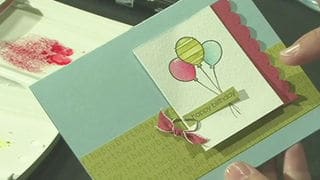
Here's a video on a technique that you can use in your crafting! It features items you receive in your Stampin' Up! demonstrator starter kit. This video is one of those great tools that is provided to help new demonstrators get their business off to a solid start. If you'd like to learn more about having your own home-based business, please RSVP for my Information Night – the next one is on Wednesday, October 13th at 7pm.
I'm getting ready for Saturday's Silent Auction at Sam's Day (oh and bowling, too) – in the meantime, here's a video on Window Sheets for your viewing pleasure. They're available in the Occasions mini catalogue and I have my fingers crossed that they'll appear in the "regular" big Idea Book & Catalogue coming out on July 1st. (Have you reserved your copy with me yet? If not – click here to do so!!)
You can purchase the Window Sheets on my Stampin' Up! website with the following item numbers:
Clear Window Sheets Medium Weight (7 mm) 114323, $7.25
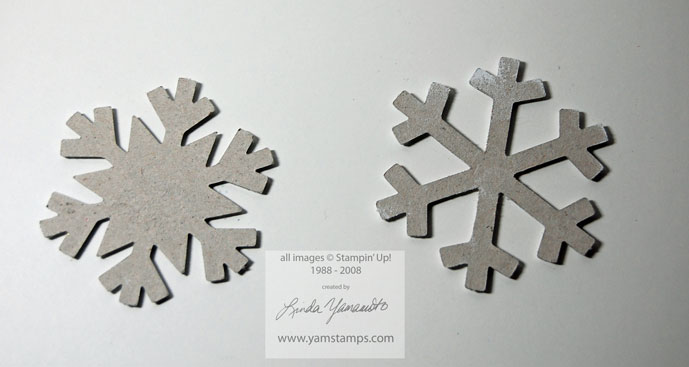
These are two of the snowflakes from Stampin' Up!'s die cut chipboard set On Board Something Seasonal. They're made of high quality acid-free chipboard and are very easy to pop out of the board. I was trying to decide which method to use to decorate the chipboard for the next Scrappers Club. So here's the "naked" chipboard.
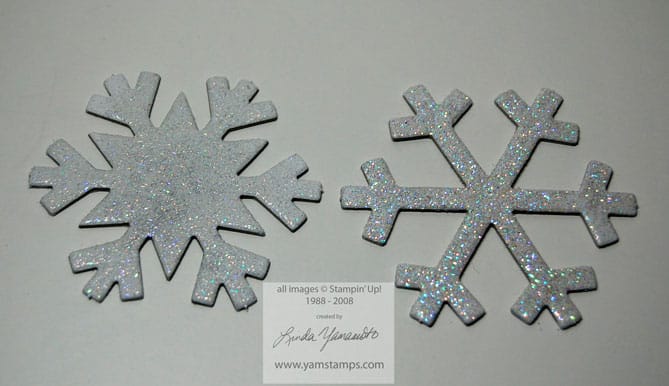
Here are the decorated snowflakes. I used white craft ink on both of them. I placed the snowflakes face down into the craft ink pad to coat them to get good coverage. Then, I used iridescent ice embossing powder (EP) on the left snowflake – coated with the powder & heated until it melted. The snowflake on the right was coated with heat & stick powder, melted with the heat gun, then coated with dazzling diamonds glitter & re-heated to "set". The EP snowflake is a little more subtle and glossy, the heat & stick/glitter snowflake a bit more sparkly and showy. You can click on the photo for a slightly larger view.
Thought I'd share this side by side comparison in case you were wondering which treatment to use on your chipboard. The Country Living Holiday Collection Chipboard shapes can also be treated in this manner. I used the heat & stick powder because I'm not great with glue…I'm a bit of a messy gluer (it ends up everywhere) so I personally find the heat & stick a bit more "neat".
Click on the picture to go to my business website and watch the video on watercolouring! If the link doesn't work, just type in www.yamstamps.stampinup.net. Once there, If you click on the little square underneath the preview picture, you can watch the video in full screen mode. Enjoy!
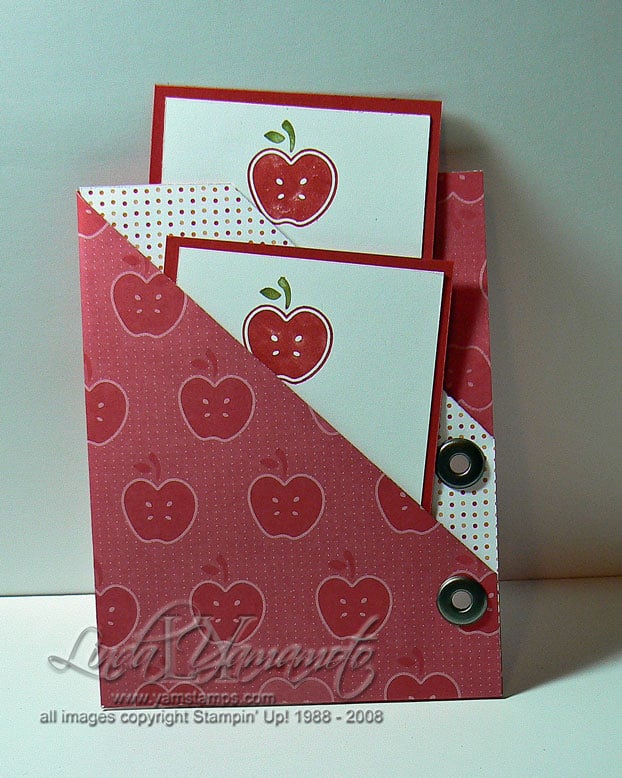
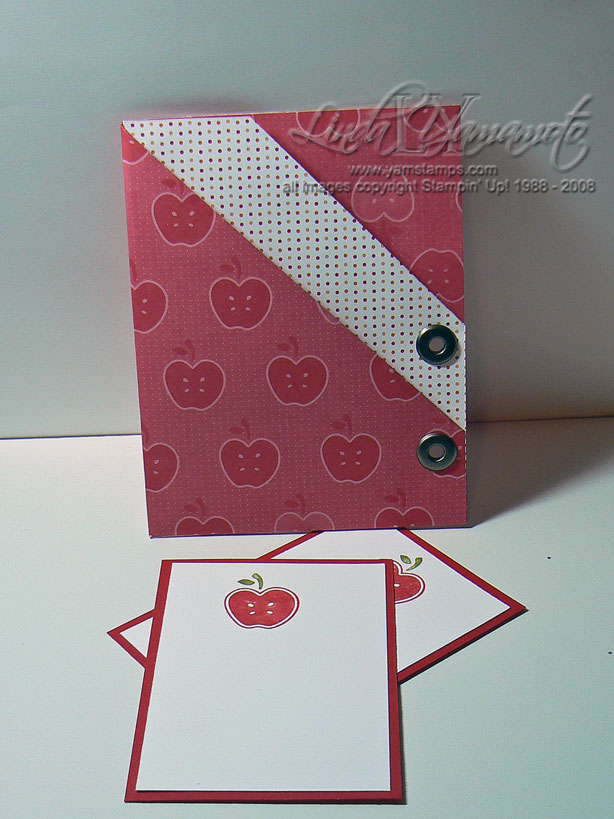
The May video tutorial is here (just under the wire!). This one features my version of a double pocket card. I had promised the video so that club members (OK and anyone who watches!) could get a handle on how we did this. I think that the sound and lighting are better on this month, and I've learned how to do the "speed up" effect… feel free to leave feedback or ask questions! Photo is of the version that I think will become the "Thank you teacher" gift at the end of the school year! One tag can easily be converted to a gift card holder by using the slot punch, and the thank you note can be written on the other tag!
Even with my editing, the video is almost 5 minutes long, so grab a cuppa while you watch (or better yet, grab some designer series paper, jumbo eyelets and your crop-a-dile and play along!!) Enjoy 🙂
TADA! The promised video is here….this is as good as it gets at this point in time… I’m going to have to work on the lighting and the audio for future videos, though – because the camera is behind me, my voice didn’t pick up very well. (hard to believe, I know); I tried brightening the video and think perhaps I overdid it…ah well, it’s a learning curve. Hopefully this will inspire you to try this project – just in time for Mother’s Day!
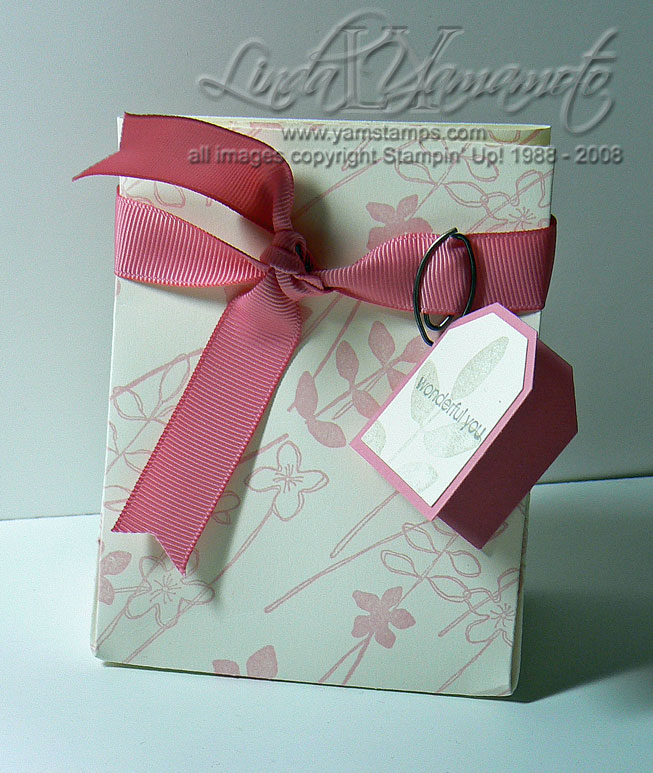
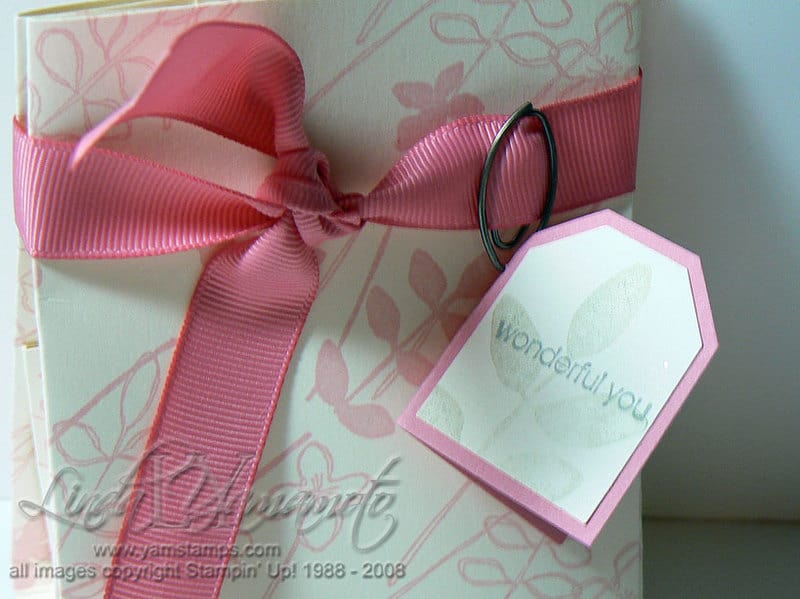
This coordinates with the Wonderful You watercolour card from my last post… Ingredients are all Stampin’ Up – Very Vanilla cardstock (8.5 x 11), Stems & Silhouettes jumbo wheel with Pretty in Pink jumbo cartridge, rose wide grosgrain ribbon, pewter hodgepodge; for tag – Wonderful You stamp set, Mellow Moss ink, Going Grey ink; small & large tag punches; vanilla & regal rose cardstock.
Here’s the photo of the project, because it doesn’t get shown off as well as it should… (click if you need to see a larger version)
And…here’s the video. Feel free to leave (gentle!) feedback here on the blog.